
Lawns Go Down in History
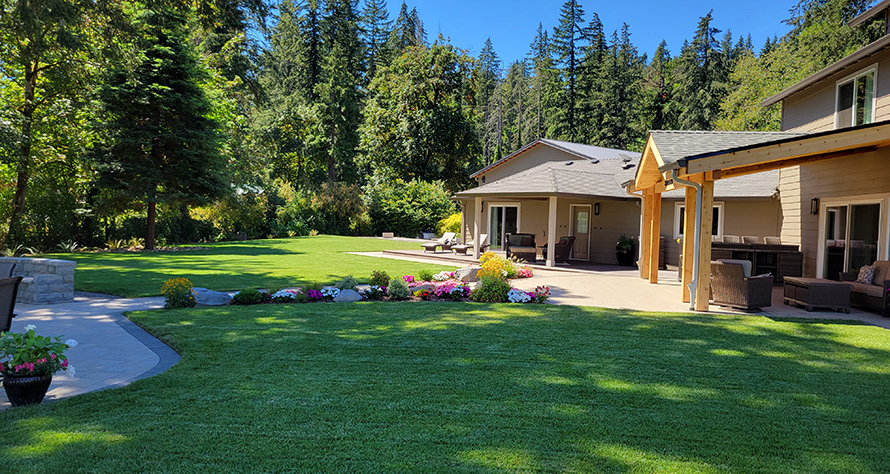
As we continue examining the history of landscape, residential lawns deserve a deeper dive because, for many years, a lawn represented the American household’s yard. That was it. A patch of grass, a metal swing set, and a charcoal grill summed up outdoor living. At Landscape East & West, we’re old enough to remember those days, and know even that simple space required care and maintenance.
But how did grassy lawns go from a symbol of wealth to a suburban staple to something that makes extreme environmentalists a bit uncomfortable?
Around 250 years ago, closely mown grass was almost exclusively associated with wealthy estates in Britain and parts of Europe. Large grassy areas surrounded country houses and manor estates and were maintained by grazing sheep and teams of laborers — the original landscapers. Lawns demonstrated that the homeowner could afford to use land for ornament and not food production.
In North America, most households did not have lawns, but instead used yards for livestock grazing and edible gardens. Often a house just sat on a parcel of packed dirt. But as money grew for some families, the desire to replicate what rich Europeans had expanded. Fortunately, several developments made lawns practical not just for the wealthy, but for middle-class homeowners.
The invention of the lawn mower in 1830 by Edwin Beard Budding was a game-changer, as was the improvement in seed production. Front lawns began sprouting up in the suburbs to create beautiful neighborhoods. At the same time, public parks were being constructed, and many showcased well-maintained grass.
In the early 20th century, lawns were made common through the expansion of suburban neighborhoods. A grassy yard became a symbol of respectability and community pride. The rise of golf courses helped reinforce the ideal of smooth, closely cut turf.
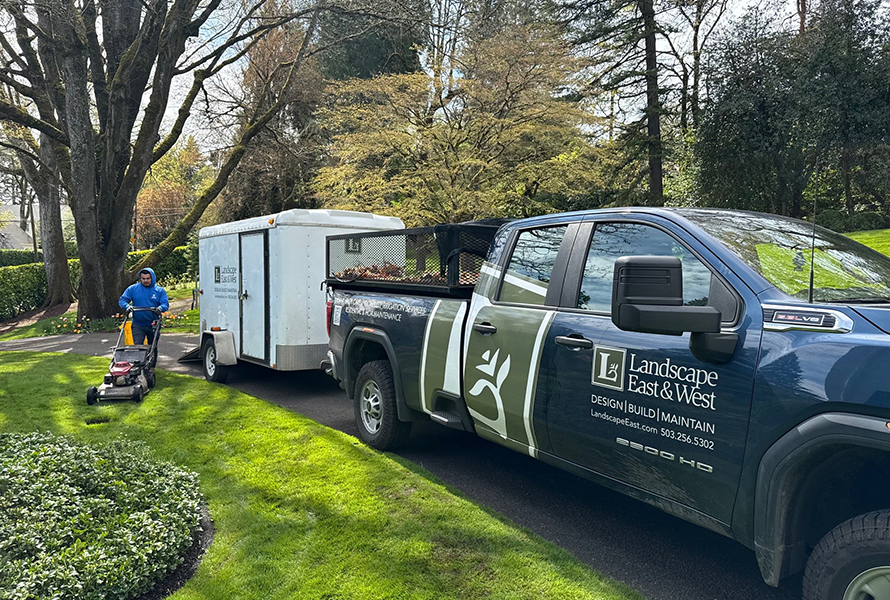
After World War II, large-scale suburban developments standardized the image of a house, with grassy front and back yards. Technological advances pushed this standard along. Fertilizer, herbicides, automatic irrigation systems, and gasoline-powered rotary mowers simplified care, but the rise of the landscape professional also took off. Despite the availability of fertilizers and lawn mowers, not all homeowners used the new technology correctly, nor did they want to do yard maintenance. A pristine lawn often required the expert knowledge and care of a landscape company.
The start of the environmental movement, represented in part by the kickoff of Earth Day in 1970, put lawns in a different light. There was a cost to all that green grass. Pesticide use and chopping down shrubs and trees for grass were detrimental to wildlife. Fertilizer runoff was starting to cause problems in water systems, and heavy irrigation was the opposite of the water conservation movement. Plus, the emissions from all those gas-powered mowers were seen as a contributor to air pollution.
While it took a few more decades for traditional lawns to fall out of the cultural norm, native plant gardens, wildflower meadows, and organic lawn care started to creep into the suburban yard. This is not to say green grass has disappeared. Turfgrass is one of the largest irrigated crops in the country, with the “crop” being ornamental rather than harvested. Research has found hardier grasses that require a bit less mowing and water, as well as new artificial turf options that look more natural than traditional sports fields.
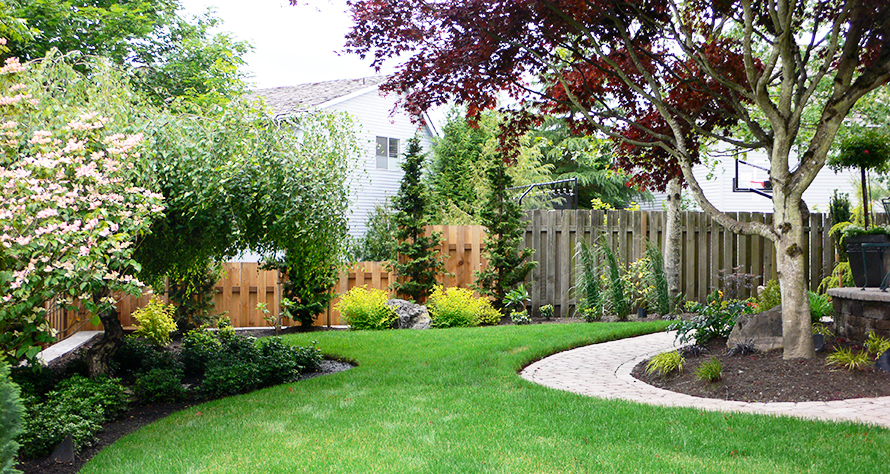
Modern homeowners are rethinking the lawn as the ideal yard beauty. Grass has been removed to add covered patios for more year-round use, water features and gazebos for added interest, and a multitude of plants from flowers and shrubs to fruit trees and vegetables. There is no one-size-fits-all yard in the suburbs, nor layers of lawn in country estates.
Creating landscapes that are as unique as the home and homeowner is where landscaping is today, and we stand ready to help you design exactly what meets your needs and desires. If you want to hang on to a grassy lawn where your kids and dogs will play, we can offer advice on how to care for it using natural and organic solutions, hardy grasses, and careful planning. We can set up regular lawn care service to keep it looking great.
Since history repeats itself, who knows, sprawling lawns might come back in vogue. But if a lawn feels too old-fashioned, we’re happy to help you create a modern outdoor oasis that you can enjoy for years to come. Contact us for a free consultation and let’s make your yard one for the history books.
