
A New Deck Can Bridge the Gap Between Outdoor and Indoor Living Spaces
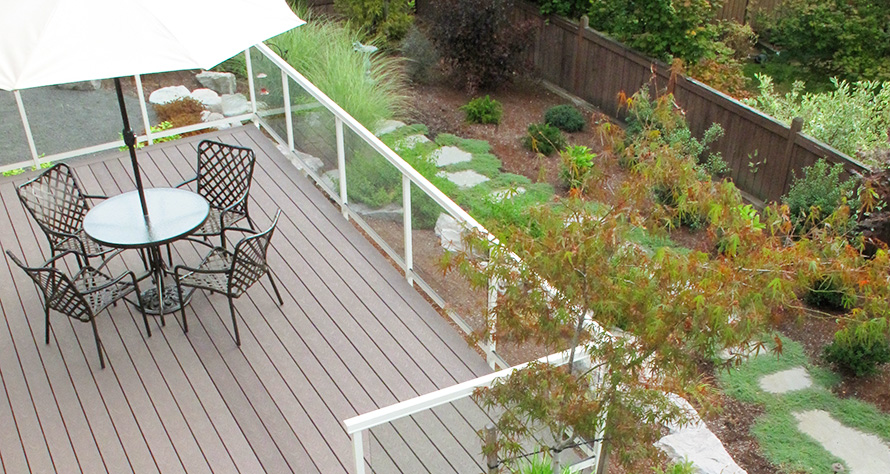
Are you as tired of hearing about “atmospheric rivers” as we are? The Pacific Northwest has been hit with more rain than even we are used to. All that water is making homeowners look out at their soggy landscapes and wonder if they’ll ever enjoy their outdoor space again.
Landscape East & West can assure you that a return to backyard enjoyment can be as simple as adding a deck. We offer premier deck design and building services, ensuring you not only have a new deck, but also that it is a showpiece for your property and the perfect bridge between your indoor and outdoor spaces.
According to Realtor.com’s Hottest Home Trends in 2025 report, outdoor living continues to be a priority for homeowners who desire a seamless transition between indoor and outdoor areas. The report notes that adding a deck is one of the most cost-effective ways to expand living space, enhance your home’s comfort and functionality, and build a stronger connection to nature. In the building industry, this is known as iophilic design, and it’s one of the hottest trends right now.
For good reason. There are many benefits to adding a deck to your yard. As rain falls, a deck can prevent water pooling in your yard and improve overall drainage. A deck along a high-traffic zone, running between your house and shed or house and pet area, can help eliminate those muddy footprints from entering your home. And while there are many reasons to love grass (or a grass alternative), a deck can replace a lawn that’s soggy in the winter and looks like scorched earth come August.
If you’re ready to add a deck, there are some decisions to be made to ensure you find the right one to match your lifestyle, taste, and budget.
First, consider where you want the deck. Are you looking for a ground-level deck that is right off a basement family room? Or are you considering a second-level deck that opens directly into the kitchen? Think through where you most often enter and exit, and what offers the most convenient access to inside amenities like a bathroom, cooking area, or bar.
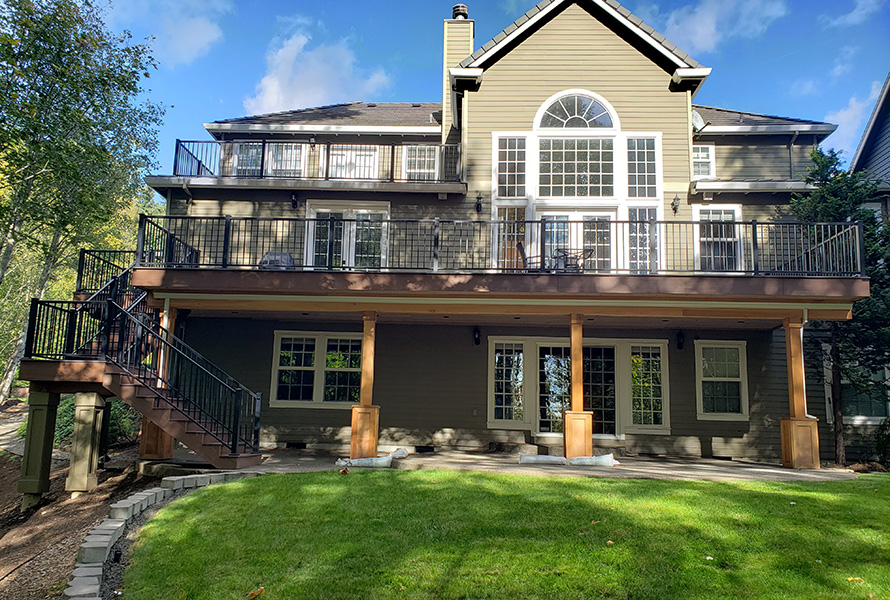
A second-story deck provides an added benefit by providing cover for ground-level entrances, enabling installation of another outdoor living space. In this scenario, the deck would need a water-catchment system beneath to keep the area dry. Beyond that, it can be designed with underside lighting and a tongue-and-groove roofing design to keep it looking more sophisticated than just the bottom of the deck.
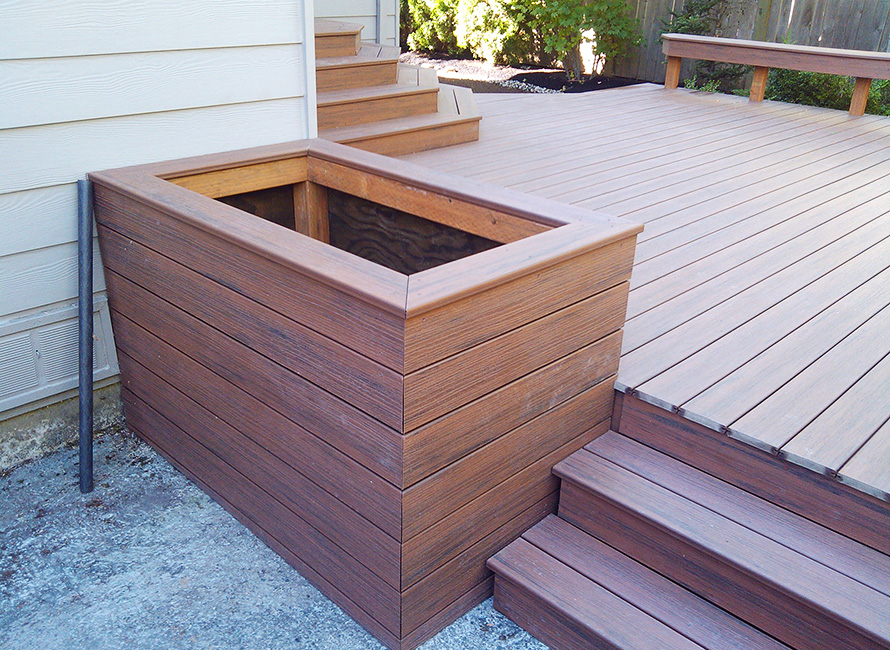
Next, think about how you want to use your deck. The purpose will affect the size, layout, and structural needs. Does your wish list include: a fire feature, hot tub, grill, outdoor kitchen, or built-in benches and planters?
Anything with added weight will need to be factored in for the footing, posts, and beams of the overall structure. Accessories that require water or power lines will also impact the deck construction and layout.
Decks are traditionally rectangular, which is the simplest form to construct, but custom design is an option and may be necessary depending on the layout of your yard. The large tree abutting your house may require a deck to be designed around it. Our in-house woodworkers can custom-design a deck to best fit your space and needs.
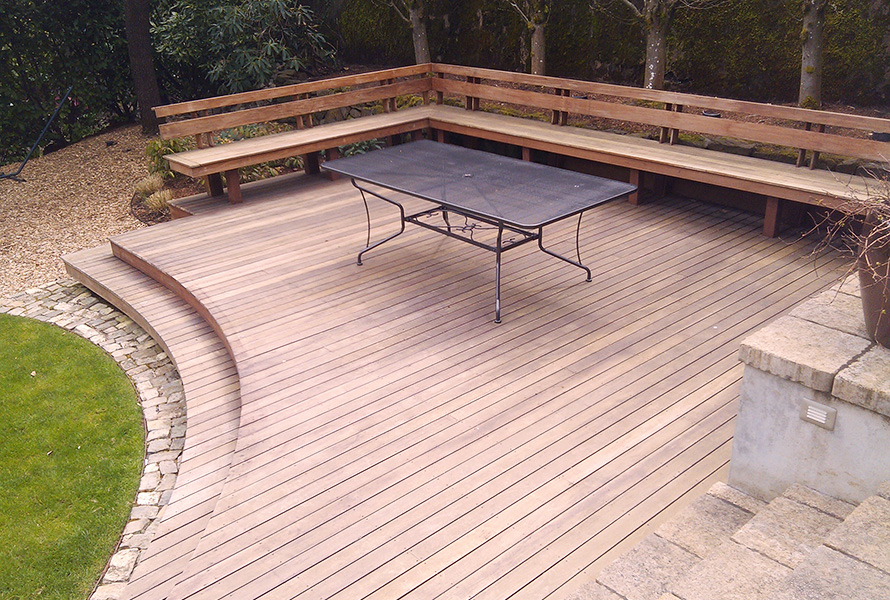
Decking material is another choice. Here, a decision may depend largely on the amount of maintenance required and longevity. You may be able to have a deck done more affordably if you use a decking material like cedar, but it won’t hold up to the rain and sun as well as alternatives like exotic hardwoods and composites.
We’re seeing many homeowners choose exotic hardwoods such as Ipe and Bamboo decking because both are hardy and long-lasting, though they still require regular maintenance. With the many design options available in composite decking, not to mention the minimal maintenance required, this is fast-becoming the “go to” material for decks around the greater Portland area.
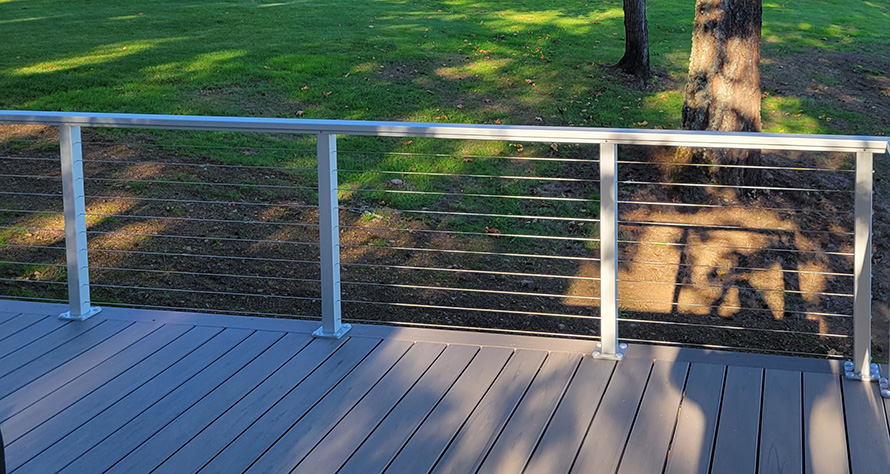
The deck itself is not the only consideration. Any deck that is at least four steps above grade or 30 inches high will require railings and, in many cases, permits. Don’t worry about the permits. Our crew knows just where to go and what to do to secure them. Your time will be spent deciding what style of rail you’d like. Cable is popular as it allows practically unobstructed views, and glass panels give a modern look that can also block wind. Pickets are a traditional option and match well with any material. An alternative to railings is to use integrated planters and benches along the perimeter of your deck for purpose and safety. This is a great option, especially in smaller spaces.
In the end, a deck may not be a one-and-done project. Think long-term to ensure you have the right base for any future upgrades or improvements, like adding a roof, creating a screened porch, or expanding the size.
If you’re ready to start exploring your deck options, contact us for a free consultation. We’re happy to talk you through the various materials and designs available. No matter what you choose, you’ll instantly expand your home’s living area to the great outdoors and gain a much better view than looking out at a drowning lawn.
